
Ears that stick out affect roughly 5% of the global population. If you are one of them, or if your child is, know this: it is an extremely common cosmetic trait, not a medical problem. It has zero effect on hearing or health. But that does not mean the emotional impact is small. Research published in the Journal of Plastic, Reconstructive & Aesthetic Surgery found that 53% of children referred for otoplasty were referred by psychiatric clinics due to severe anxiety and social distress linked to ear appearance.
Today there are more options than ever. This guide covers every method for fixing protruding ears, from free styling tricks to adhesive correctors to surgery, with honest pros and cons for each. If you are researching for yourself, your teen, or your baby, this is the only resource you need.
Why Do Ears Stick Out? The Anatomy Behind Prominent Ears

Before choosing a solution, it helps to understand the cause. Prominent ears are almost always genetic, and they come down to one or both of two anatomical factors:
- Underdeveloped antihelical fold. The antihelical fold is the Y-shaped ridge of cartilage inside the ear. When this fold is shallow or absent, the upper portion of the ear projects outward instead of curving back toward the head.
- Excess conchal cartilage. The concha is the deep, bowl-shaped area next to the ear canal. When this bowl is deeper or larger than average, it pushes the entire ear away from the skull.
In clinical terms, ears are considered "prominent" when the helix (outer rim) sits more than 20 mm from the mastoid bone behind the ear. A 2017 study in Plastic and Reconstructive Surgery confirmed that prominent ears are the most common congenital ear deformity, affecting 5-6% of people worldwide.
Key takeaway: because the cause is structural cartilage shape, methods that physically reposition or reshape the cartilage will be most effective. Exercises that claim to "strengthen" ear muscles will not change cartilage angles.
The Full Spectrum of Solutions: Least to Most Invasive
Every method for fixing ears that stick out falls somewhere on a spectrum from completely reversible to permanently surgical. Here is an honest comparison of all your options.
| Method | Best For | Invasiveness | Cost | Permanence | Key Benefit |
|---|---|---|---|---|---|
| Hairstyling & accessories | Anyone wanting a quick visual fix | None | Free to low | Temporary (concealment only) | No products needed, instant |
| Adhesive ear correctors | Adults, teens, children seeking instant cosmetic correction | Non-invasive | Low | Temporary, reversible | Immediate, invisible, pain-free repositioning |
| DIY medical taping | Last-minute temporary fix | Non-invasive | Very low | Temporary | Widely available materials |
| Infant ear molding/splinting | Newborns (0-6 months) | Non-invasive | Low to moderate | Often permanent (reshapes soft cartilage) | Guides natural growth, avoids future surgery |
| Otoplasty surgery | Anyone wanting a permanent structural change | Fully invasive (anesthesia, incisions) | $5,000-$10,000+ | Permanent | One-time, lasting cartilage reshaping |
Method 1: Hairstyles and Accessories
The simplest, most accessible approach is concealment through styling. While it does not physically change ear position, the right haircut or accessory can dramatically reduce how noticeable prominent ears are.
Haircuts that minimize ear prominence
- Soft layers starting at the jawline or cheekbones. These frame the face and add volume at the sides, naturally covering the ears.
- Wavy or curly textures. Waves create visual movement and break up the straight sightlines that can emphasize ear projection.
- A deep side part. This creates flattering asymmetry, sweeping hair over one ear and softening the other.
- Textured bobs or tousled pixie cuts. Shorter styles can still work if they build volume around the crown and sides.
Accessories that redirect attention
- Bold eyeglass frames pull focus to the eyes and center of the face.
- Statement necklaces or scarves draw the eye downward.
- Hats, beanies, or headbands provide direct coverage with added style.
Honest assessment: Styling tricks are free and require no commitment, but they limit your options. You cannot freely wear a ponytail, updo, or short cut without revealing your ears. For many people, this trade-off is not sustainable long-term, which is why the methods below exist.
For more detailed ideas, check out our guide on the best hairstyles for prominent ears.
Method 2: Adhesive Ear Correctors
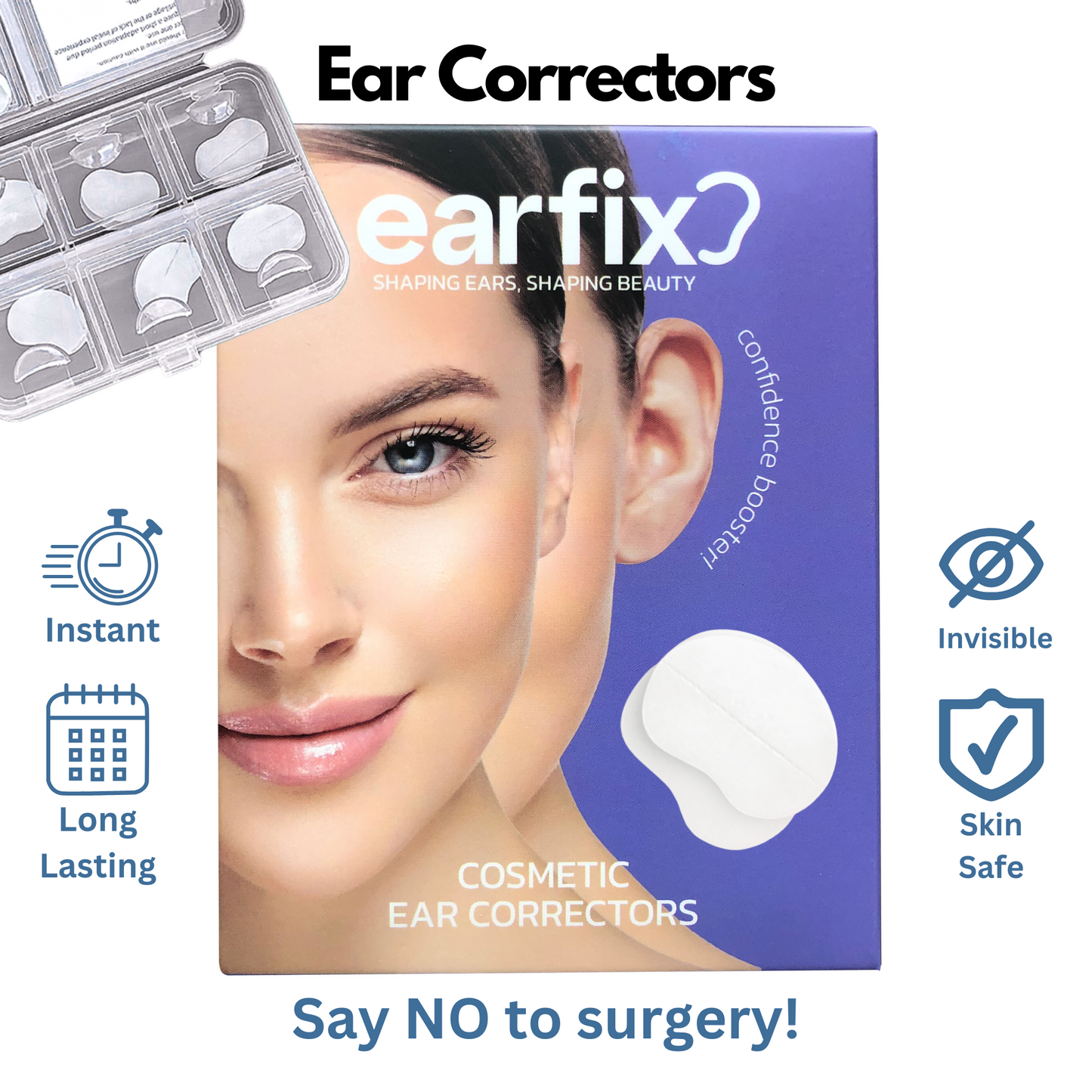
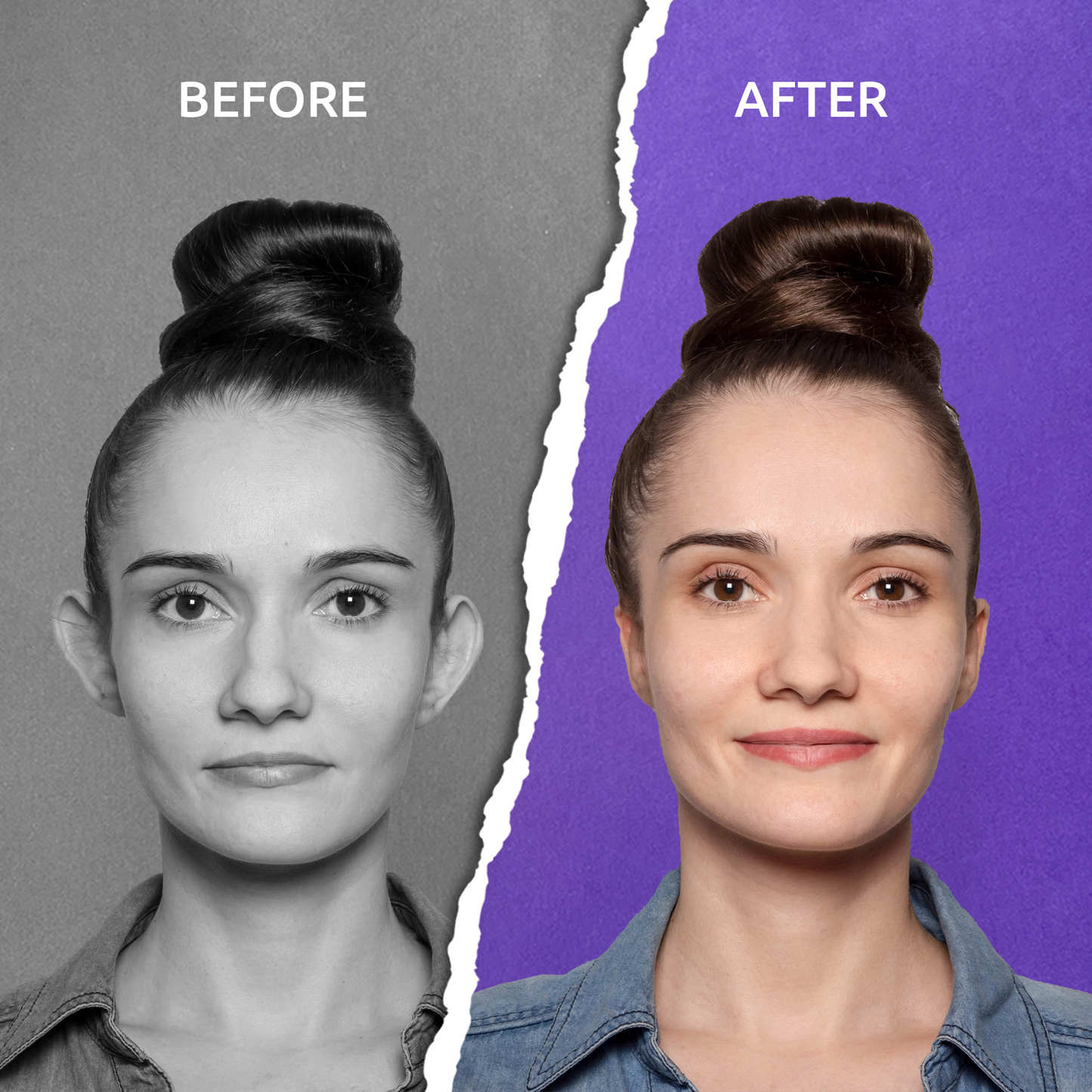
Adhesive ear correctors are the most popular non-surgical method for fixing ears that stick out. They offer an immediate, invisible cosmetic change without any pain or recovery time.
How they work
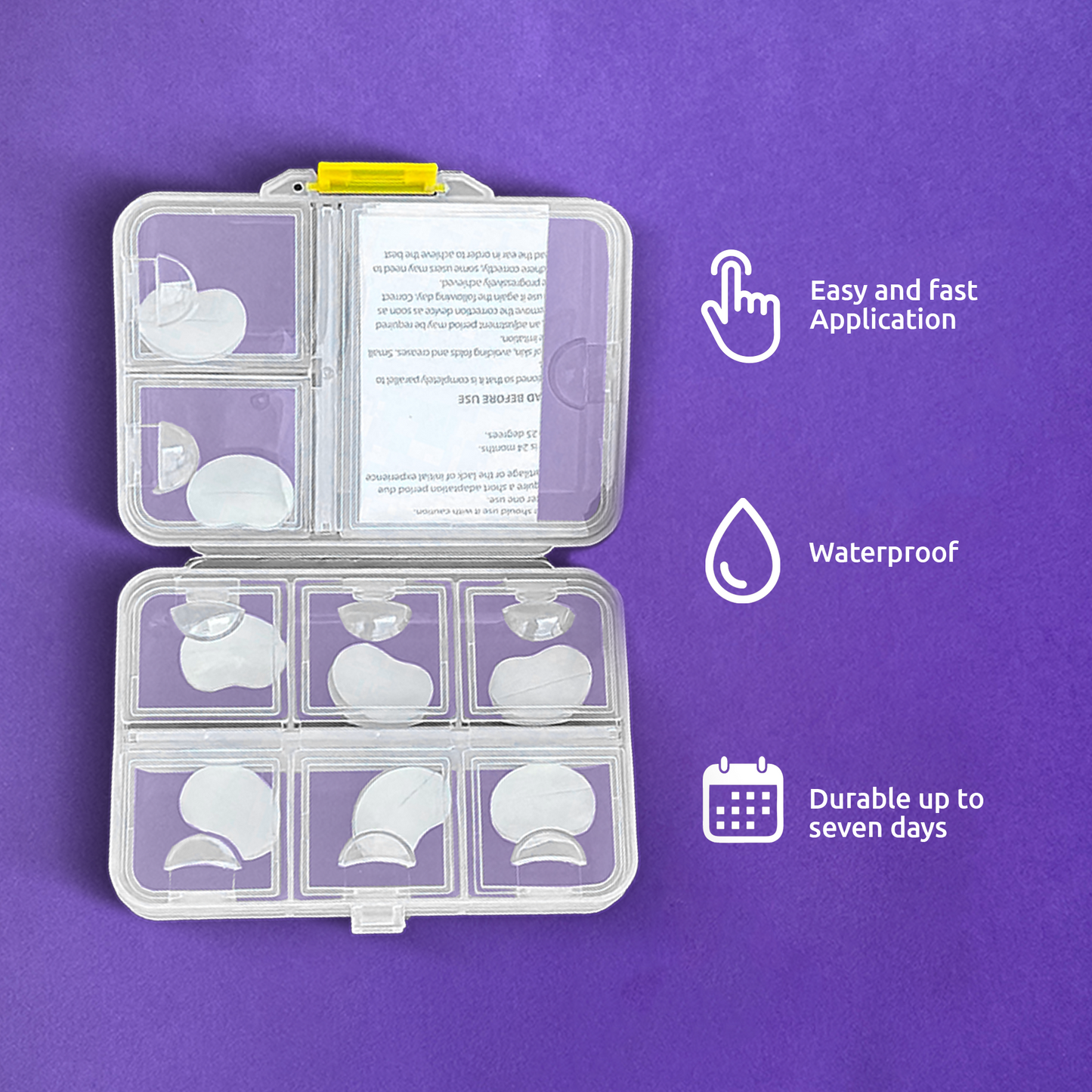
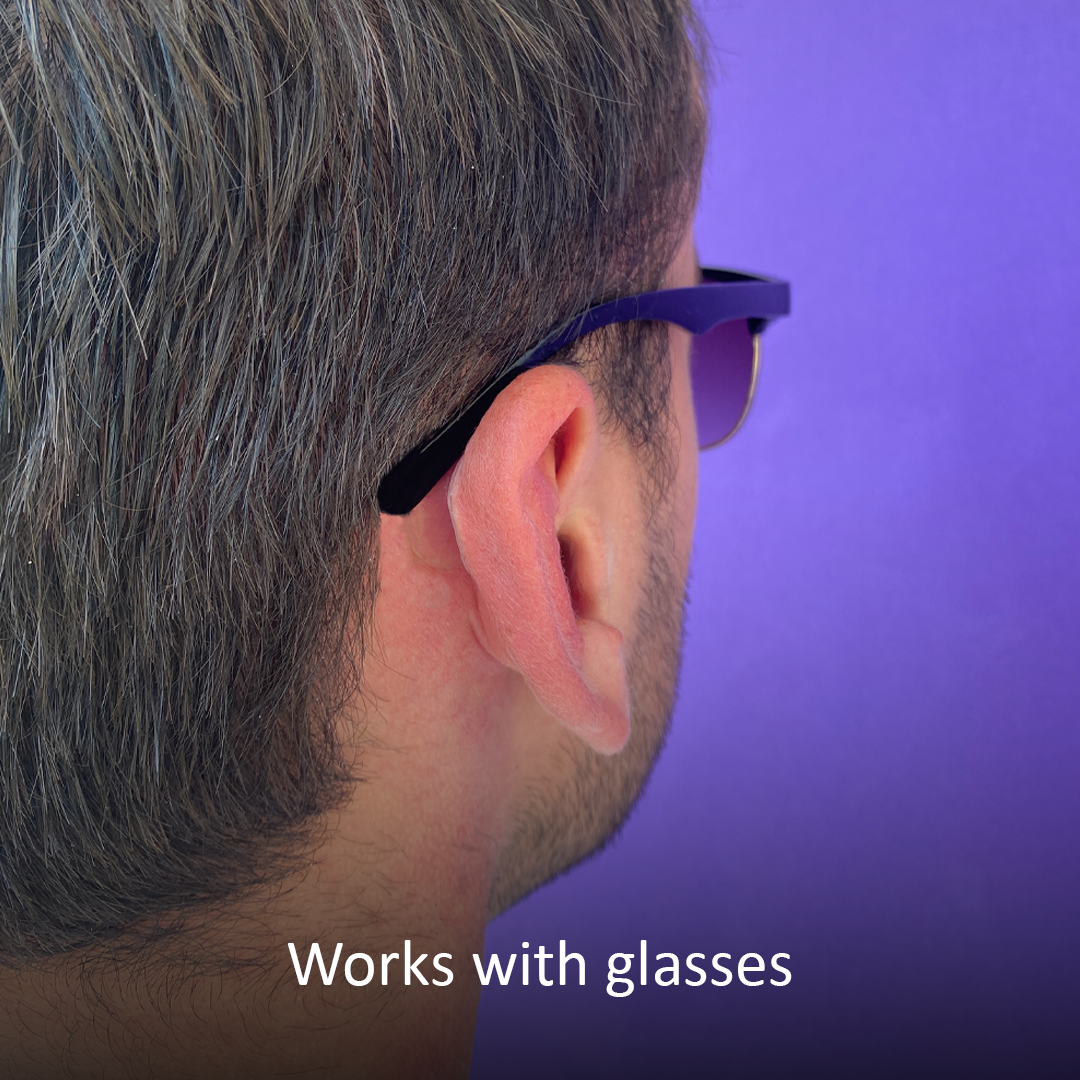
An ear corrector is a small, transparent, double-sided adhesive made from medical-grade silicone. One side adheres to the back of the ear, and the other side adheres to the skin on your head behind the ear. This gently pulls the ear into a position closer to the head, creating a natural-looking profile in seconds.
What to expect
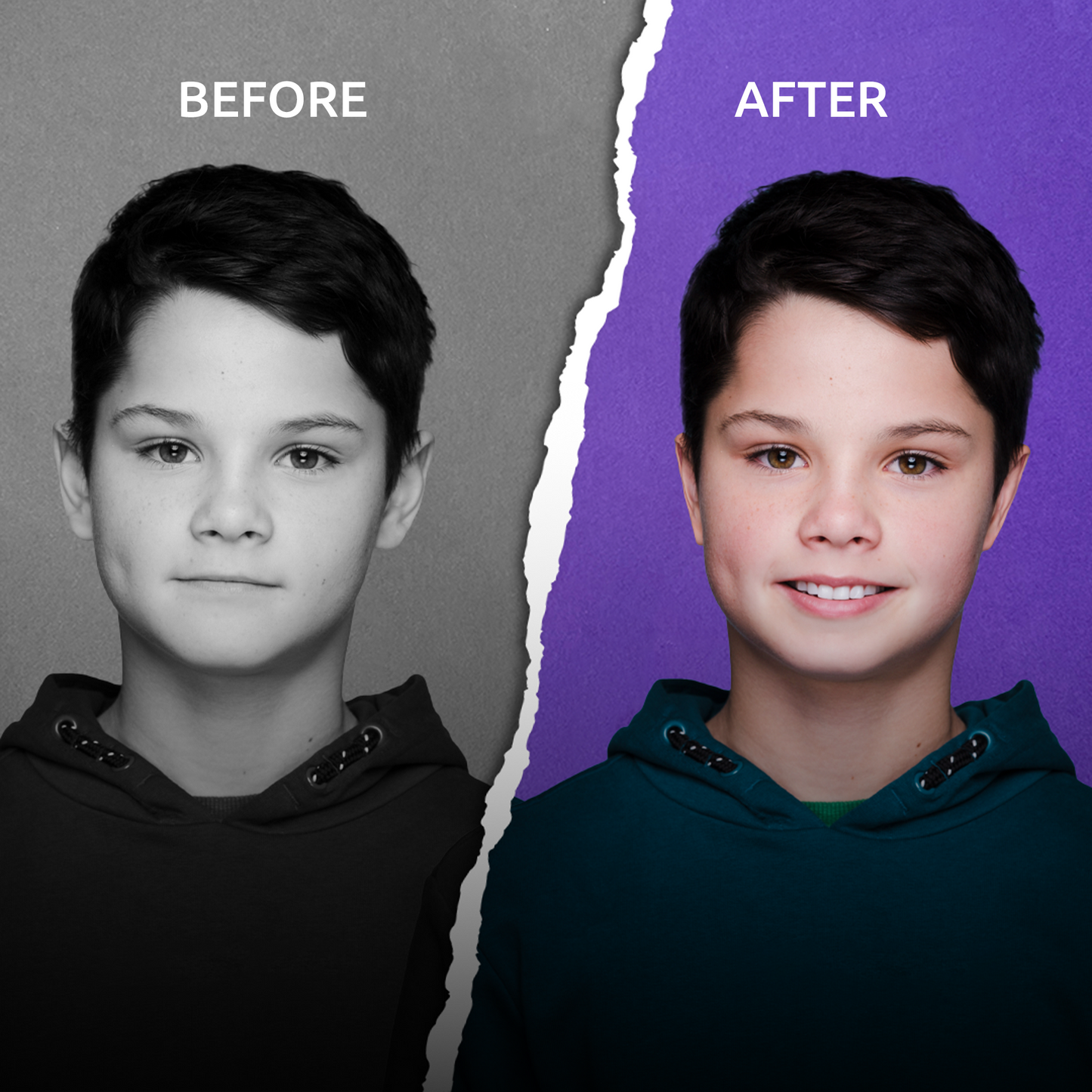
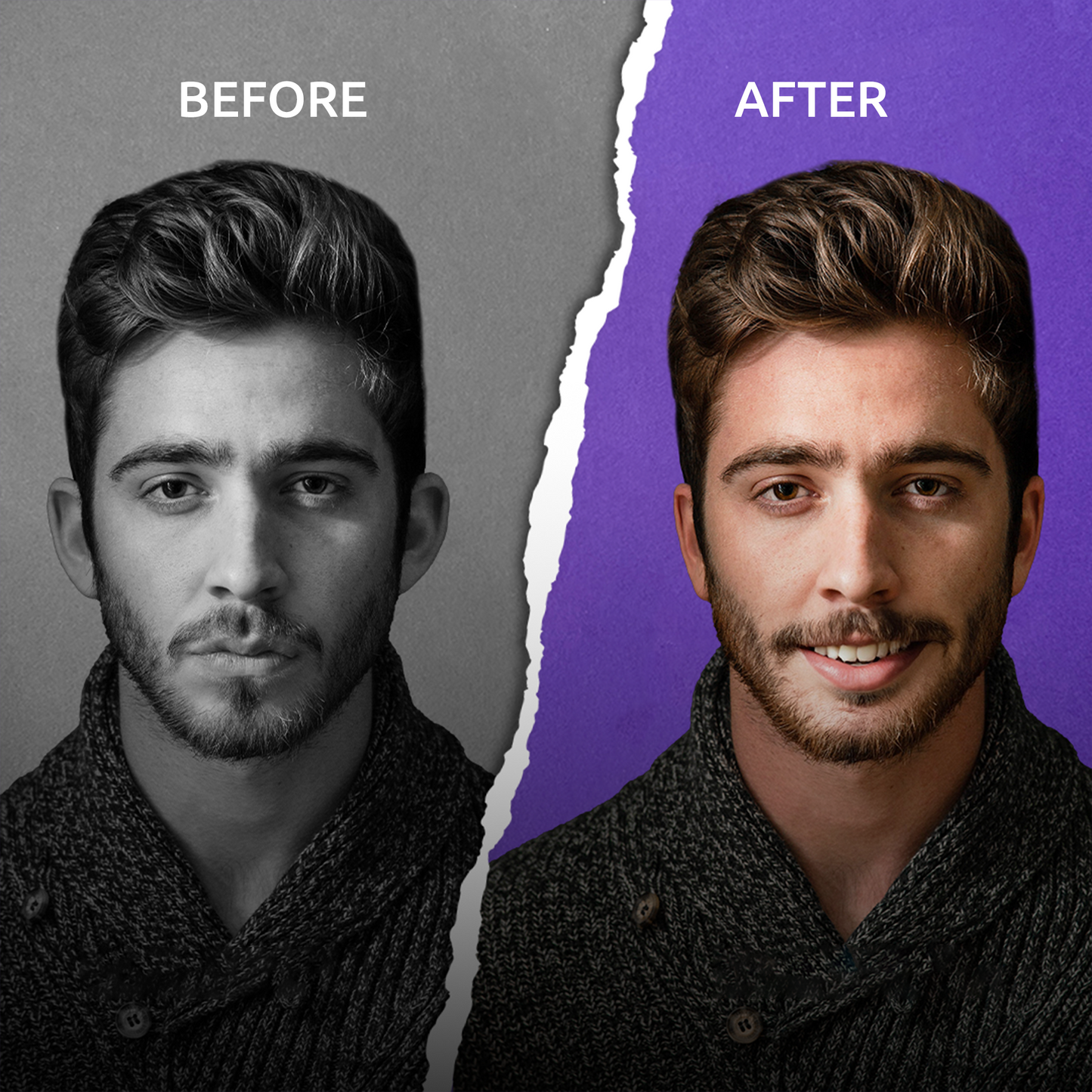
- Results: Instant. The ear is repositioned the moment you apply the corrector.
- Duration: A single pair typically lasts 3 to 7 days, depending on skin type, activity level, and climate.
- Comfort: Quality correctors use hypoallergenic, dermatologist-tested adhesive. Most users report forgetting they are wearing them within minutes.
- Durability: Water-resistant. You can shower, swim, exercise, and sleep with them on.
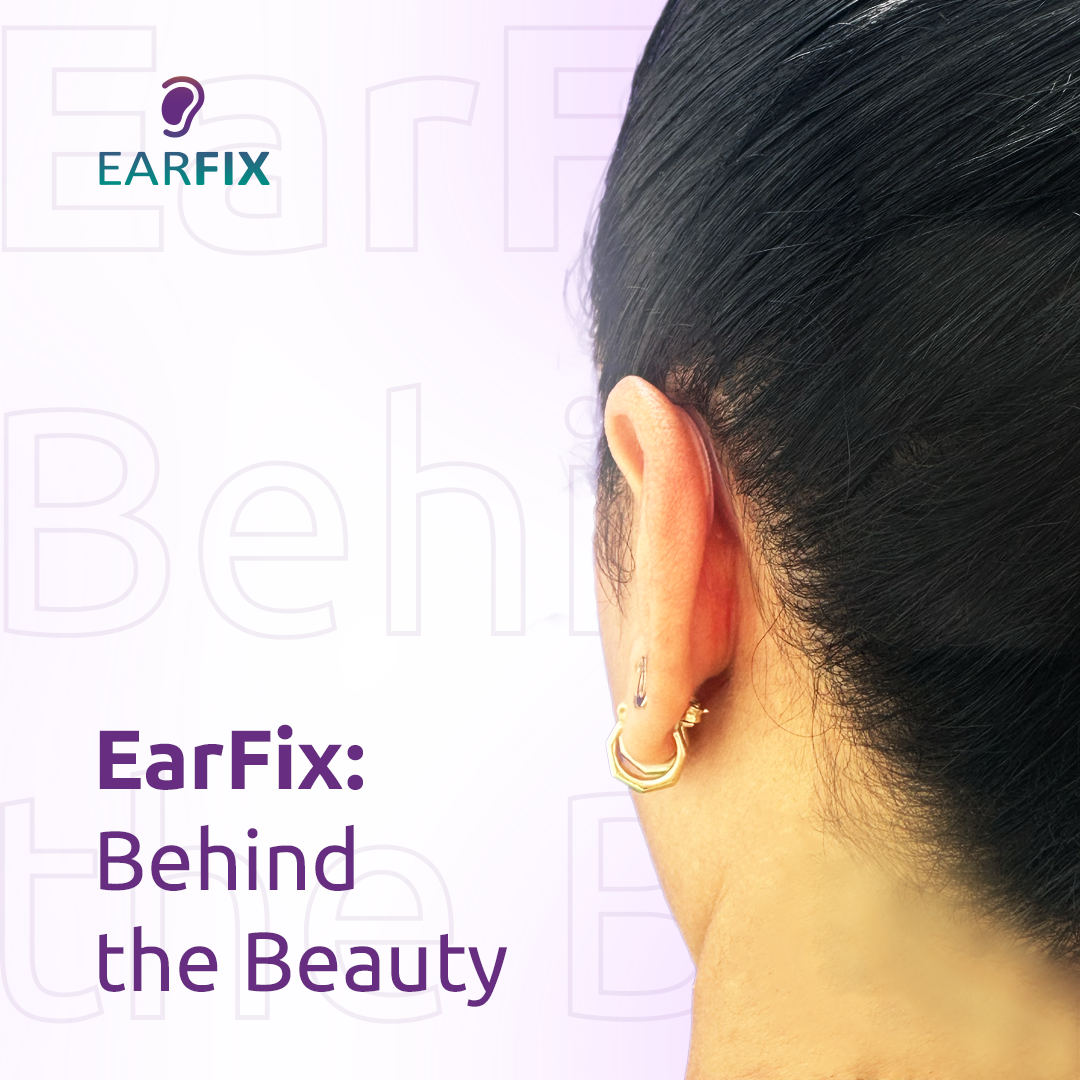
- Visibility: Transparent silicone blends with all skin tones. Virtually invisible, even with hair pulled back.
Application tips for best results
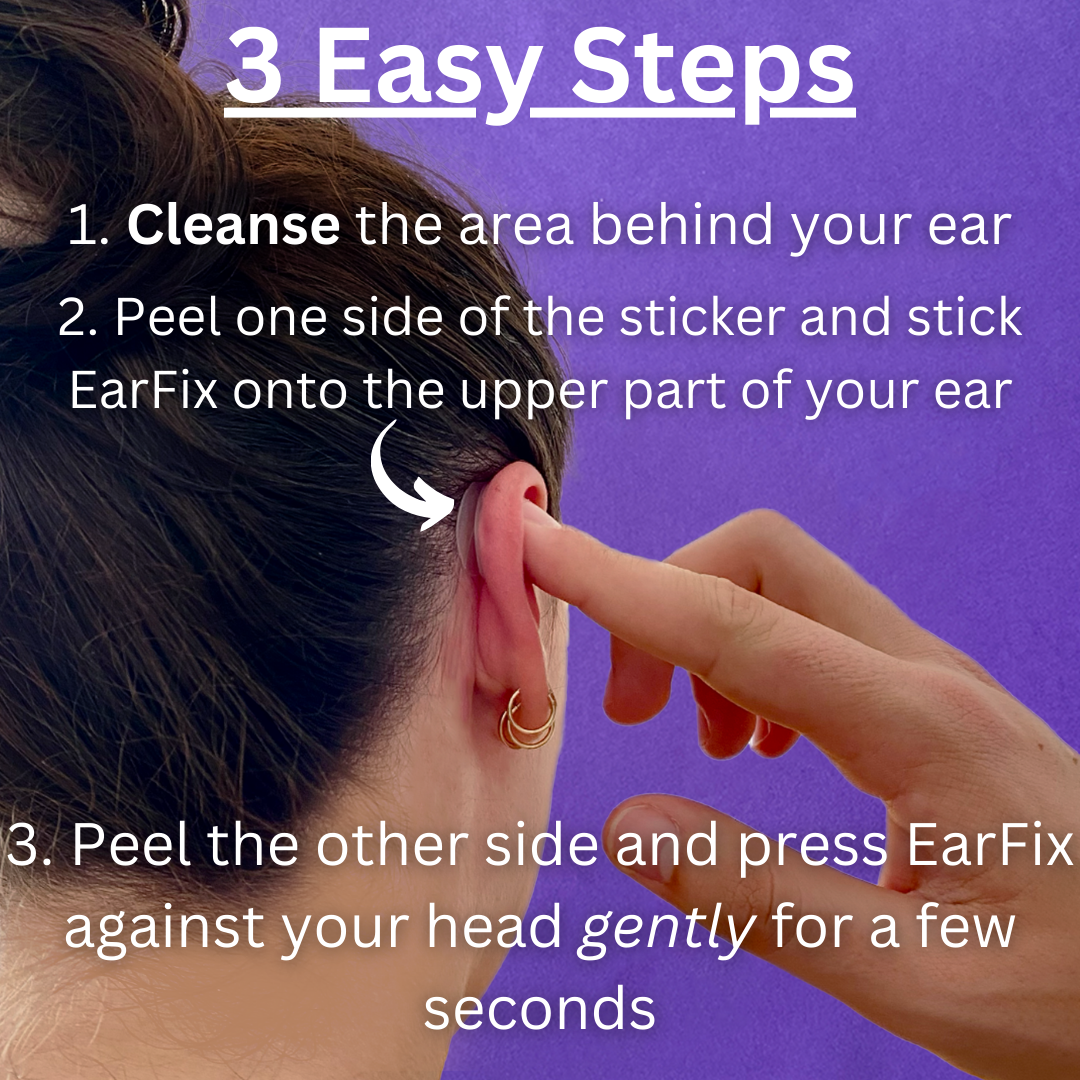
- Clean the skin thoroughly. Use an alcohol wipe or oil-free cleanser on the skin behind your ear and the corresponding spot on your head. Natural oils are the number one cause of weak adhesion.
- Dry completely. Even slight moisture weakens the bond. Pat dry and wait a moment.
- Apply to the ear first. Peel the backing from one side, press it firmly to the upper back of the ear for several seconds. Avoid touching the adhesive with your fingers.
- Position and press. Peel the second backing, gently guide your ear into the desired position, and press the exposed adhesive against your head. Hold for 60 seconds to activate the bond.
- Wait before getting wet. Allow at least 4 hours before swimming or intense exercise so the adhesive can fully cure.
For a visual walkthrough, see our step-by-step how to use EarFix guide.
Removal
Never pull correctors off quickly. Apply a small amount of baby oil or oil-based makeup remover around the edges, wait 30-60 seconds for the adhesive to dissolve, and then peel gently. Wash the area afterward to remove any residue.
Pro tip: rotate placement
If you wear correctors daily, shift the placement by a few millimeters each time. This gives the skin a chance to breathe and prevents any single spot from becoming sensitive.
Pros and cons of adhesive correctors

- Pros: Instant results, completely pain-free, affordable, reversible, works with any hairstyle, suitable for ages 3 months and up.
- Cons: Temporary (must be replaced every 3-7 days), will not permanently change cartilage structure in adults, requires clean dry skin for best adhesion.
Products like EarFix ear correction stickers are specifically engineered for this purpose, using medical-grade silicone and dermatologist-tested adhesive. They are a significant upgrade over DIY tape methods in terms of comfort, hold strength, and discretion.
Method 3: DIY Taping
Before purpose-built correctors existed, some people used medical tape or double-sided tape to hold ears back. The concept is the same as adhesive correctors, but there are notable drawbacks.
- Visibility: Medical tape is usually white or beige and far more noticeable than clear silicone correctors.
- Adhesion: Not designed for the curved, oily skin behind ears. Tends to peel, especially with sweat or moisture.
- Skin irritation: Standard tape adhesives are not formulated for extended wear on sensitive skin. Redness, itching, and residue are common.
- No safety testing: Unlike products made specifically for ear correction, general-purpose tape has not been dermatologist-tested for this use.
Honest assessment: Taping can work in a pinch for a single event, but it is not a reliable daily solution. Purpose-built correctors are safer, more comfortable, and far more discreet.
Method 4: Infant Ear Molding (For Babies Under 6 Months)
This is the one method that can produce permanent results without surgery, and it takes advantage of a narrow biological window.
Why it works
Newborns retain high levels of maternal estrogen for the first weeks after birth. This hormone keeps the ear cartilage exceptionally soft and moldable, almost like clay. As estrogen levels drop over the first 6 months, the cartilage gradually firms into its permanent shape. By applying gentle, consistent pressure during this window, you can guide the ear into a more typical position before it hardens.
What the research says
A study published in the International Journal of Pediatric Otorhinolaryngology found that non-surgical splinting for babies under 6 months achieved excellent or satisfactory improvement in 57.14% of cases with zero complications. Another study on neonatal ear correction confirmed that treatment started in the first weeks of life yielded the highest success rates. Earlier intervention consistently produces better outcomes.
Types of infant ear correction
- Clinical ear molding systems (e.g., EarWell). Applied by a doctor, these use a rigid cradle device worn for 4-6 weeks. Highly effective but requires clinic visits and can cost $2,000-$4,000.
- At-home adhesive correctors for babies. Baby-specific adhesive correctors use a gentle, hypoallergenic adhesive and soft silicone to hold the ear in the correct position at home. They are more affordable and can be applied by parents as part of a daily routine.
What to look for in a baby ear corrector
- Dermatologist-tested, hypoallergenic adhesive
- Medical-grade, breathable silicone
- Sized specifically for infant ears
- Gentle adhesion that is firm enough to hold but will not distress the baby on removal
Practical tips for parents
- Apply after bath time, when skin is clean and dry.
- Replace with a fresh corrector every few days.
- Consistency matters. The more hours per day the ear is held in position, the better the result as cartilage firms.
- Start as early as possible. The first 3 months offer the softest cartilage and the best chance of lasting correction.
Honest assessment: Infant ear molding is the closest thing to a "permanent fix" without surgery. But the window is narrow (ideally before 6 months), and results depend on consistency and individual cartilage response. Not every baby will achieve a perfect result, but the risk-to-benefit ratio is excellent given the method is completely non-invasive.
Method 5: Otoplasty Surgery
Otoplasty (ear pinning surgery) is the only option that permanently reshapes the cartilage in older children and adults. According to the International Society of Aesthetic Plastic Surgery (ISAPS), surgeons performed 327,990 otoplasty procedures worldwide in 2023, making it one of the more common cosmetic surgeries.
How the procedure works
A surgeon makes small incisions behind the ear to access the cartilage. Depending on the specific anatomy, they may score, fold, or remove cartilage to create a stronger antihelical fold, then use permanent sutures to secure the ear closer to the head. The procedure typically takes 1-2 hours.
Who is a good candidate
- Children age 5-6 and older. By this age, ears have reached roughly 90% of their adult size, making surgery structurally viable.
- Teens and adults who have considered the decision carefully and want a permanent change.
- Anyone for whom non-surgical methods are not sufficient to meet their goals.
What to expect
- Anesthesia: General anesthesia for children, local with sedation for most adults.
- Recovery: Bandages for several days, a protective headband worn for 1-2 weeks (often longer at night), and avoidance of strenuous activity for 4-6 weeks.
- Cost: Typically $5,000-$10,000 in the United States. Rarely covered by insurance since it is considered cosmetic.
- Risks: Infection, visible scarring, hematoma, changes in skin sensation, asymmetry, and (rarely) overcorrection requiring revision.
- Results: Permanent. The cartilage is physically restructured.
Pros and cons of otoplasty
- Pros: Permanent, one-time procedure, proven track record across decades.
- Cons: Expensive, requires anesthesia and recovery, carries surgical risks, irreversible (revision surgery is possible but complicated), not recommended for very young children.
Honest assessment: Otoplasty is the right choice for people who are certain they want a permanent, structural change and are prepared for the cost, recovery, and risks involved. For everyone else, starting with a non-surgical method makes practical sense. You can always try a reversible option first and pursue surgery later if needed. For a deeper comparison, read our full EarFix vs. Surgery breakdown.
How to Make Ears Appear Smaller Without Surgery
A common search is "how to reduce ear size without surgery." Here is an important clarification: most people who feel their ears are "too big" are actually perceiving the prominence (how far the ears project from the head), not literal ear size. When the ear is repositioned closer to the head, it immediately appears proportionate and smaller.
That said, true ear size (macrotia) is a separate condition that can only be addressed surgically. If your concern is ear projection rather than overall size, the non-surgical methods above (especially adhesive correctors and infant molding) are highly effective.
Quick visual check
Gently press your ears flat against your head with your fingers. If the result looks right to you, your issue is prominence, not size, and non-surgical correction will work well.
Realistic Expectations: What Each Method Can and Cannot Do
Setting honest expectations is important. Here is a straightforward summary:
- Hairstyling: Conceals but does not reposition the ear. Works only while the style is maintained.
- Adhesive correctors: Repositions the ear immediately but temporarily. Will not permanently alter cartilage in adults. Must be replaced regularly. However, for many people, this is all they need to feel confident.
- Infant ear molding: Can produce permanent results by reshaping soft cartilage during the first months of life. Results vary by individual and depend on timing and consistency.
- Otoplasty: Permanently reshapes cartilage. Results are lasting but come with surgical risks, cost, and recovery.
No method is universally "best." The right choice depends on your age, goals, budget, and comfort level with medical procedures. Many people find that affordable adhesive correctors give them everything they need for daily confidence, while others eventually choose surgery for a permanent solution. Both paths are valid.
When to See a Doctor
Most prominent ears are purely cosmetic and do not require medical attention. However, consult a physician or pediatric ENT specialist if:
- There is a sudden change in ear shape or asymmetry (which could indicate injury or infection).
- Your infant's ear deformity is severe or accompanied by other congenital conditions.
- You experience pain, swelling, or discharge from the ear.
- You are considering otoplasty and want a professional assessment of candidacy and expected outcomes.
- Your child is experiencing significant psychological distress related to ear appearance.
Frequently Asked Questions
Can you permanently fix ears that stick out without surgery?
For infants under 6 months, yes. The cartilage is soft enough to be gently reshaped with consistent use of a baby ear corrector, and these results can be permanent. For adults, non-surgical methods like adhesive correctors provide an immediate cosmetic fix but are temporary. The only permanent option for older children and adults is otoplasty surgery.
Are ear correction stickers safe for sensitive skin?
Quality ear correctors use medical-grade, hypoallergenic silicone with dermatologist-tested adhesive. They are designed for the delicate skin behind the ear and are safe for both adults and babies. If you have known skin sensitivities, do a small patch test on an inconspicuous area before wearing them for a full day.
How long do adhesive ear correctors stay on?
A single pair typically lasts 3 to 7 days with proper application. Longevity depends on skin type (oily skin may reduce wear time), activity level, and climate. They are water-resistant and can be worn during showers, exercise, and sleep. For the strongest hold, always apply to clean, completely dry, oil-free skin.
Do ear exercises actually work for prominent ears?
No. Ear prominence is caused by cartilage shape and angle, not muscle weakness. There are no muscles in the outer ear that you can strengthen to pull it closer to the head. Any "ear exercises" you find online will not change the structural position of your ears. Methods that physically reposition the ear (correctors, molding, or surgery) are the only effective approaches.
At what age can you start correcting a baby's ears?
The ideal window is as early as possible, typically starting from the first few weeks of life. The cartilage is softest in the first 3 months due to residual maternal estrogen. Treatment can still be effective up to about 6 months, but earlier intervention consistently produces better and more lasting results. After the cartilage hardens (usually by age 1), non-surgical reshaping is no longer possible.
How much does otoplasty cost, and is it covered by insurance?
In the United States, otoplasty typically costs between $5,000 and $10,000, depending on the surgeon, location, and complexity. Because it is classified as a cosmetic procedure, it is rarely covered by health insurance. Some surgeons offer payment plans. By comparison, adhesive ear correctors cost a small fraction of this amount per month, making them a practical option for those who want results without the financial commitment of surgery.
Wondering about the emotional side? Learn about the psychological impact of prominent ears and practical coping strategies backed by research.